
The rapid deployment of rooftop photovoltaic (PV) systems is a central element of Europe’s energy transition. Across Member States, increasing electrification and the renovation of the building stock are expected to accelerate the installation of PV systems, particularly on flat roofs.
At the same time, this transformation introduces new technical considerations. When PV systems are added to existing roof structures, they modify the overall behaviour of the system, including its response to fire. The interaction between the roof build-up, the PV installation and cavity effects can influence flame spread and heat transfer in ways that are not captured by standard single-component models.
The Rooftop PV Safety campaign, led by EUMEPS, addresses this issue through a structured and evidence-based approach. Its objective is to support the safe, insurable and scalable deployment of rooftop PV systems across Europe, while maintaining alignment with EU climate and energy objectives.
Why this campaign matters now
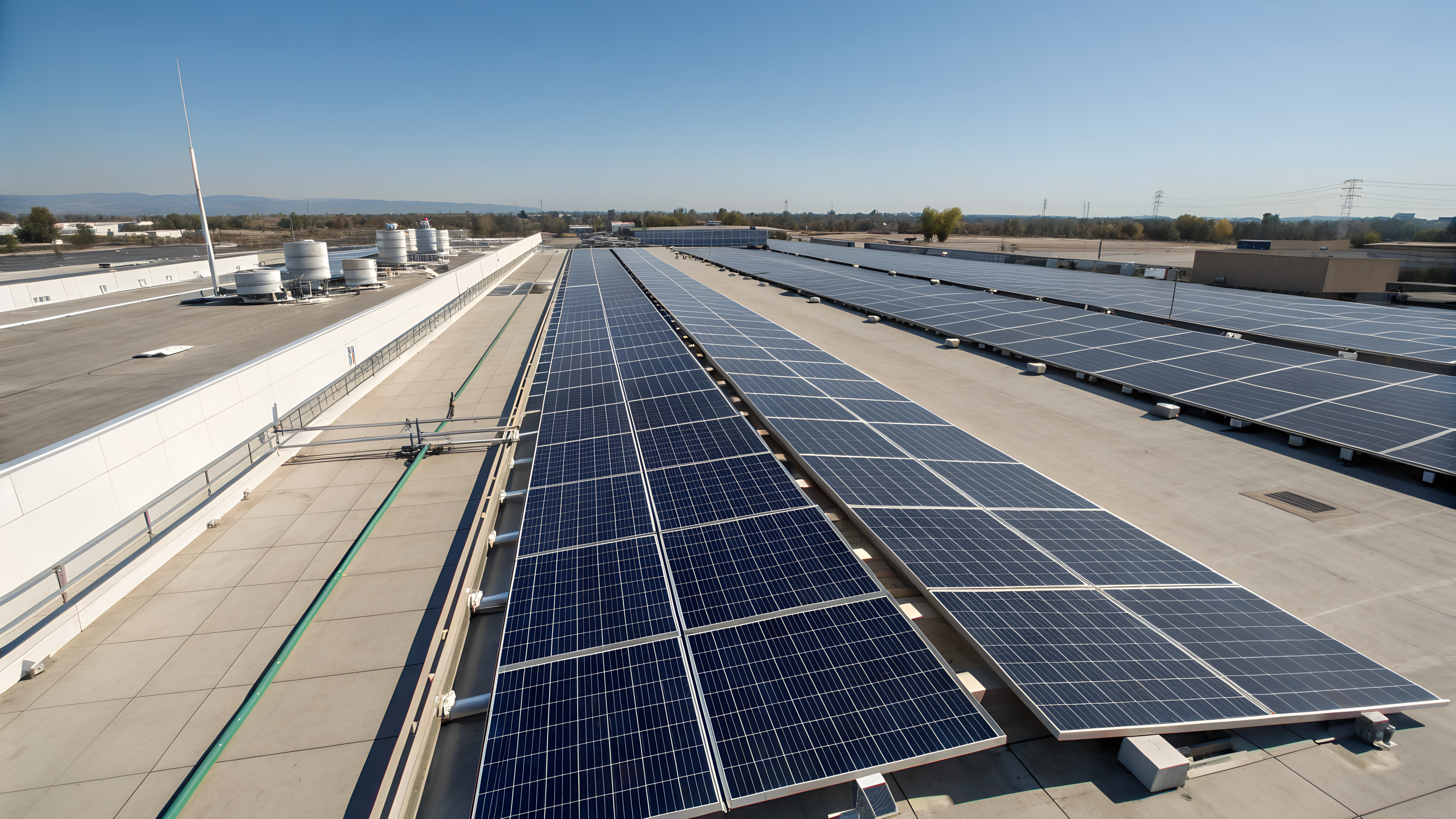 Europe’s ambitions for rooftop PV rely on deployment at scale. However, as installations increase, fire safety concerns are becoming more visible in discussions among regulators, insurers and market actors. If these concerns are not addressed in a consistent and credible way, they may lead to fragmented national requirements, cautious underwriting practices, or delays in project development.
The main issue is that fire risk cannot be evaluated independently of other factors. It is not determined by a single material or component, but by the way the full roof system performs under real conditions. When PV systems are installed, the geometry of the roof changes and can create new pathways for fire propagation.
In this context, the campaign introduces a clear position: fire safety should be addressed as a system-level issue, supported by evidence and aligned with the realities of installation. This approach makes it possible to manage risk in a proportionate and predictable way, while avoiding polarised debates that focus narrowly on individual materials.
A clear strategic positioning
 The campaign is built around simple and policy-relevant principles:
Fire safety is a condition for scaling rooftop photovoltaics — not an obstacle to the energy transition.
This framing is deliberate. It shifts the discussion from risk avoidance to risk management, and from constraint to enablement. Rather than presenting fire safety as a barrier, the campaign positions it as a necessary step to ensure that rooftop PV can be deployed at scale with confidence.
At the same time, the campaign maintains a constructive tone. It does not seek to compare materials or promote substitution. Instead, it focuses on how system performance can be improved through practical and evidence-based solutions.
From material debate to system performance
A central element of the campaign is the move away from material-based discussions towards a system-first perspective. In practice, this means considering the full roof configuration, including insulation, membranes, PV systems and cavity dynamics.
This shift is supported by findings from large-scale fire tests. These tests show that the addition of PV systems changes the fire dynamics of the roof, but also that appropriate mitigation measures within the system can significantly reduce flame spread and limit damage.
The value of this approach lies in its realism. By reflecting actual installation conditions, it provides a more reliable basis for risk assessment and decision-making. It also supports alignment between different stakeholders, who can rely on a shared understanding of how the system behaves under fire conditions.
Supporting safe and scalable deployment
Beyond technical considerations, the campaign addresses a broader strategic challenge: how to ensure that rooftop PV deployment remains both rapid and reliable.
If fire safety concerns are not managed proactively, they can lead to indirect barriers. These may take the form of additional requirements, insurance exclusions or reduced confidence among building owners. Over time, such factors can slow down deployment, even in the absence of formal regulatory restrictions.
By contrast, a system-first, performance-based approach helps remove these barriers. It provides a structured framework for understanding risk, supported by evidence from large-scale testing. This, in turn, contributes to more predictable decision-making and a more stable environment for investment and implementation.
In this sense, fire safety becomes an enabling condition for policy delivery. It supports the effective implementation of EU objectives on energy efficiency, electrification and renovation, while reinforcing trust across the value chain.
Building predictability and trust across stakeholders
 The campaign is designed to respond to the needs of three key stakeholder groups, each of which approaches the issue from a different perspective.
For EU policymakers and regulators, the priority is to ensure that rooftop PV can be deployed at scale without creating unintended risks or inconsistencies across Member States. The campaign provides an evidence base that supports proportionate and harmonised approaches, aligned with performance-based regulatory principles.
For insurers, the central issue is predictability. The rapid growth of rooftop PV is changing the risk profile of buildings, and clearer frameworks are needed to assess and manage this evolution. By focusing on system behaviour and mitigation measures, the campaign contributes to more consistent underwriting practices and reduces reliance on precautionary exclusions.
For the solar PV sector, the challenge is to maintain deployment momentum while addressing concerns from regulators and insurers. A system-based approach helps avoid unnecessary friction and supports constructive dialogue, ensuring that safety considerations do not undermine confidence in rooftop PV solutions.
A contribution to EU policy objectives
Rooftop PV plays a key role in achieving Europe’s energy and climate targets. Its large-scale deployment is closely linked to objectives such as energy independence, decarbonisation and the renovation of existing buildings.
The campaign contributes to these objectives by addressing one of the emerging challenges associated with this transition. By focusing on system performance and evidence-based mitigation, it supports the development of more consistent risk management practices across Europe.
This approach facilitates the creation of harmonised guidance, reduces regulatory uncertainty and enables smoother implementation of projects. In doing so, it helps ensure that fire safety supports, rather than constrains, the delivery of EU policies.
Strategic objective of the campaign
The overarching objective of the campaign is to contribute to the safe and accelerated roll-out of rooftop PV systems on flat roofs across Europe.
More specifically, it seeks to demonstrate that fire risk can be effectively managed through a system-first, performance-based mitigation approach, supported by large-scale evidence.
In doing so, the campaign aims to reinforce the credibility of EPS within the evolving PV landscape, while supporting a broader shift towards system-level thinking in building performance and safety.
Looking ahead
The campaign is not a standalone communication effort, but part of a broader process of engagement and evidence-building. Further work will focus on expanding the database through additional testing, supporting the development of guidance and standards, and facilitating dialogue between regulators, insurers and industry stakeholders.
This continued effort is essential to ensure that rooftop PV can be deployed safely, consistently and at scale across Europe, in line with both technical requirements and policy ambitions.
About EUMEPS
EUMEPS represents the entire value chain of Expanded Polystyrene (EPS) in Europe. Through this campaign, it contributes to ongoing discussions on building performance, safety and sustainability, with a focus on practical, evidence-based solutions that support European policy objectives.