
Evidence, Initiatives and Policy Discussions across the EPS Value Chain
In a world that is increasingly conscious of environmental sustainability, EPS is used in construction and packaging applications. This page presents recycling initiatives, technical characteristics and policy discussions relating to EPS. Environmental performance must be assessed for the specific product, application and system concerned.
EPS Recycling Initiatives

EUMEPS provides information on initiatives relating to the collection, sorting and recycling of EPS. An example is the PSLoop plant, where EPS containing HBCD is processed to separate the polymer from the legacy flame retardant.
The PSLoop technology is designed to treat HBCD-containing polystyrene foam in accordance with applicable requirements under the EU POPs Regulation. The process separates the HBCD-containing fraction from recovered polystyrene for further use where permitted.
This commitment is further exemplified by the recent inauguration of the Versalis recycling plant in Porto Marghera, Italy. The site transforms post-consumer EPS waste into recovered polystyrene for specified applications in construction and packaging.
Such investments can expand collection and recycling capacity and support the development of secondary-raw-material markets in Europe.
EUMEPS members are also at the forefront of circular innovation. To name only a few initiatives:
-
Knauf, through its Knauf Circular programme in France, has developed a large-scale system for collecting, sorting, and recycling used EPS directly from construction sites. This initiative aims to support collection and recycling pathways for EPS from construction activities.
HIRSCH anchors its sustainability strategy on three pillars: REspect, REduce, and REcycle. The company focuses on reducing fossil fuel consumption, promoting resource efficiency, and increasing the share of recycled content in both construction and packaging applications. Specific environmental-performance claims relating to these activities should be supported by publicly available company data and their defined scope.
- EPSolutely, a nationwide research programme launched in Austria, also contributes to the circular transformation of the sector. It brings together key industry stakeholders to collect, recycle, and reintegrate EPS waste into new products, while raising awareness among end-users and local authorities. The initiative combines research, collection and stakeholder engagement.
-
In 2026, BEWI further strengthened European EPS recycling capacity by opening Norway’s first dedicated recycling facility for EPS waste. The plant enables the processing of post-consumer EPS into recovered raw material for specified applications in packaging and construction.
The expansion of such regional recycling hubs can support the development of local collection, sorting and recycling systems.
Comparative environmental claims about mechanical recycling, including claims on CO₂ emissions, should only be used with a direct link to the underlying study. The study should identify the product, functional unit, comparison, geographical scope, data period and methodology.
EPS can be technically recycled through mechanical, physical and chemical processes. Effective collection and recycling depend on the product design, its application and the availability of suitable local collection, sorting and recycling infrastructure.
EPS, Materials and Recycling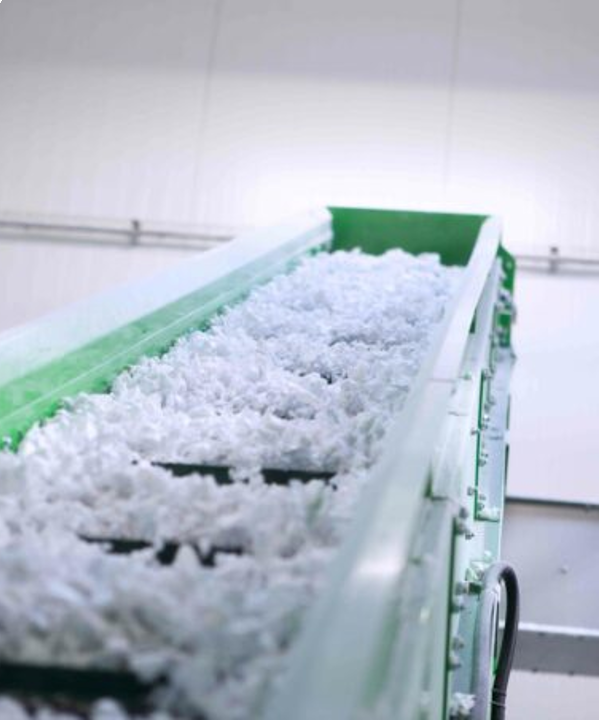
EPS is approximately 98% air by volume. Its lightweight properties and mono-material structure can be relevant to the design of packaging and insulation products. Recycling outcomes depend on product design and on available collection, sorting and recycling systems.
Any life-cycle assessment (LCA) claim must be presented with a direct link to the underlying study and with its scope, assumptions, comparison and functional unit clearly identified. Statements concerning “carbon payback” should not be used without this information displayed in close proximity.
Additionally, the EPS industry is actively engaged in initiatives intended to prevent pellet loss. Among them, Operation Clean Sweep® (OCS®) is a voluntary programme providing guidance and tools for pellet-loss prevention. Its separate European certification scheme involves external audits at facility level. Claims that a specific company or facility is certified should be verified against the current certification records.
In February 2026, EUMEPS became a signatory to a joint set of Strategic Recommendations for a Resilient and Circular Plastic Value Chain in Europe, developed by more than 30 organisations across the plastics value chain. The document highlights the need for a competitive industrial base alongside robust circularity measures, noting challenges such as declining production volumes, slowed expansion of recycling capacity and facility closures in recent years. EUMEPS’ endorsement reflects the view that effective circular economy objectives must be paired with predictable regulatory frameworks, improved collection and recycling systems, and conditions that support investment and innovation in European plastics manufacturing and recycling. These recommendations aim to reconnect climate and circularity goals with industrial competitiveness, contributing to a policy agenda that supports sustainable materials and long-term value chain resilience.

The journey towards circularity relies on collaboration across the entire value chain, from raw material suppliers to recyclers. EUMEPS also contributes to improved recycling data collection and supports evidence-based policy discussions under the Packaging and Packaging Waste Regulation (PPWR) and the revised Energy Performance of Buildings Directive (EPBD).
EPS in Construction and Packaging: Technical Considerations
In buildings, EPS insulation can contribute to the thermal performance of façades, roofs and floors when correctly specified and installed. Actual energy use, greenhouse-gas impacts and in-use performance depend on the complete building system, including its design, installation, climate, operation and energy source.
The selection of insulation materials should be based on the requirements of the building system, applicable regulations and documented product performance.
In packaging applications, EPS can provide thermal insulation and mechanical protection for products such as home appliances and temperature-sensitive goods. The suitability of a packaging solution depends on the product, packaging design, transport conditions and required level of protection.
EPS packaging can be technically recycled where suitable collection, sorting and recycling infrastructure is available.
EUMEPS: Evidence-Based Policy Dialogue
By embracing the technical recyclability of EPS through established processes and advocating for responsible practices, we support initiatives on collection, sorting and recycling. As we continue to advance our sustainability agenda, we remain focused on transparent information, collaboration and evidence-based solutions for the EPS value chain.
EUMEPS remains committed to an evidence-based approach, promoting transparency, responsible production, and the assessment of environmental performance on a product- and application-specific basis. Through alignment with EU climate, circular economy and industrial competitiveness objectives, EUMEPS contributes sector expertise to a pragmatic and science-based sustainability pathway for Europe.