

Having recently joined EPS-foreningen, the Norwegian association for Expanded Polystyrene (EPS), as Project Manager, Marie Skogdal brings extensive experience in logistics, resource management and recycling to the EPS industry. With a strong interest in developing practical circular economy solutions, she is focusing on improving EPS collection systems and increasing recycling rates through closer collaboration across the value chain. In this interview, Marie shares her first impressions of the industry, discusses the opportunities for more efficient collection and recycling, and reflects on how cooperation and well-designed logistics can support a more resource-efficient future for EPS in Norway and across Europe.
You have recently joined EPS-foreningen, NEPSA and Plastretur after several years working in logistics and resource management. What attracted you to the EPS sector, and what motivated you to take on this new challenge?
What attracted me to the role was the combination of sustainability, logistics and industry collaboration. Throughout my previous career, I worked with resource management and recycling, where I saw how important efficient collection and logistics systems are for creating real circularity.
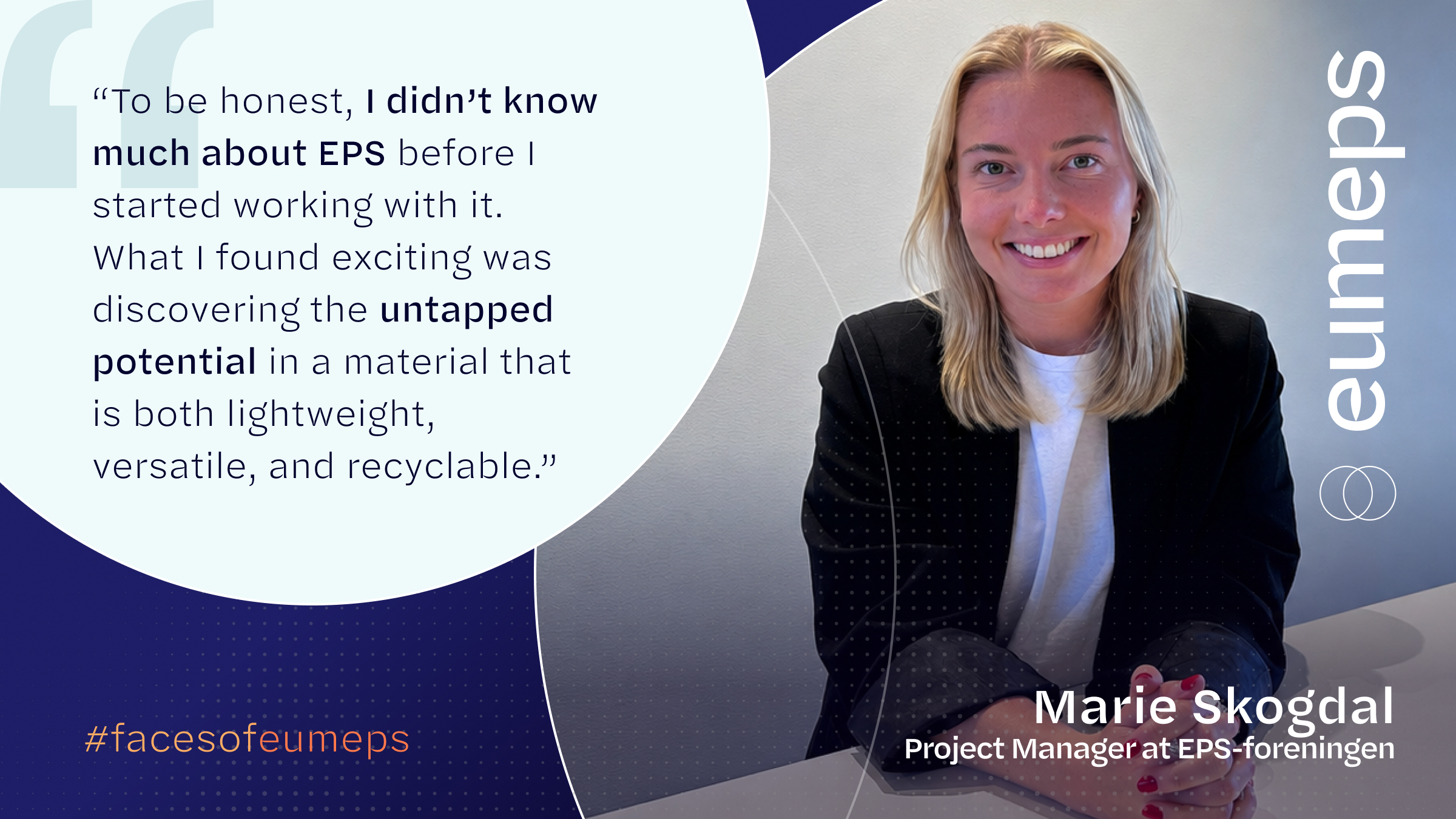
To be honest, I didn’t know much about EPS before I started working with it. What I found exciting was discovering the untapped potential in a material that is both lightweight, versatile, and recyclable. The opportunity to collaborate across the value chain and contribute to improving collection and recycling quickly made the topic both interesting and meaningful to me.
Just as importantly, the position offers the chance to contribute both nationally and internationally through Plastretur, EPS-foreningen, NEPSA and EUMEPS, and to work with industry stakeholders who are committed to improving circular solutions for EPS.
Your role focuses on developing collection and recycling solutions for EPS. From your first impressions, what do you see as the biggest opportunities to improve EPS collection and increase recycling rates in Norway?
One of the biggest opportunities lies in improving the collection of what we in Norway often refer to as "technical EPS", packaging from products such as electronics, white goods and construction materials.
The material is highly recyclable, but because it is lightweight and bulky, collection and transport can be challenging. This means that the solution is not only about recycling technology, but it is equally about logistics and accessibility.
I see strong potential in building on existing logistics networks and return flows rather than creating entirely new systems. By making collection easier for businesses and consumers and improving cooperation between stakeholders, we can significantly increase recycling rates while keeping costs manageable.
Norway is often recognised for its well-developed recycling systems. Are there any practices or experiences from the Norwegian model that could inspire other European countries looking to strengthen their EPS recycling infrastructure?
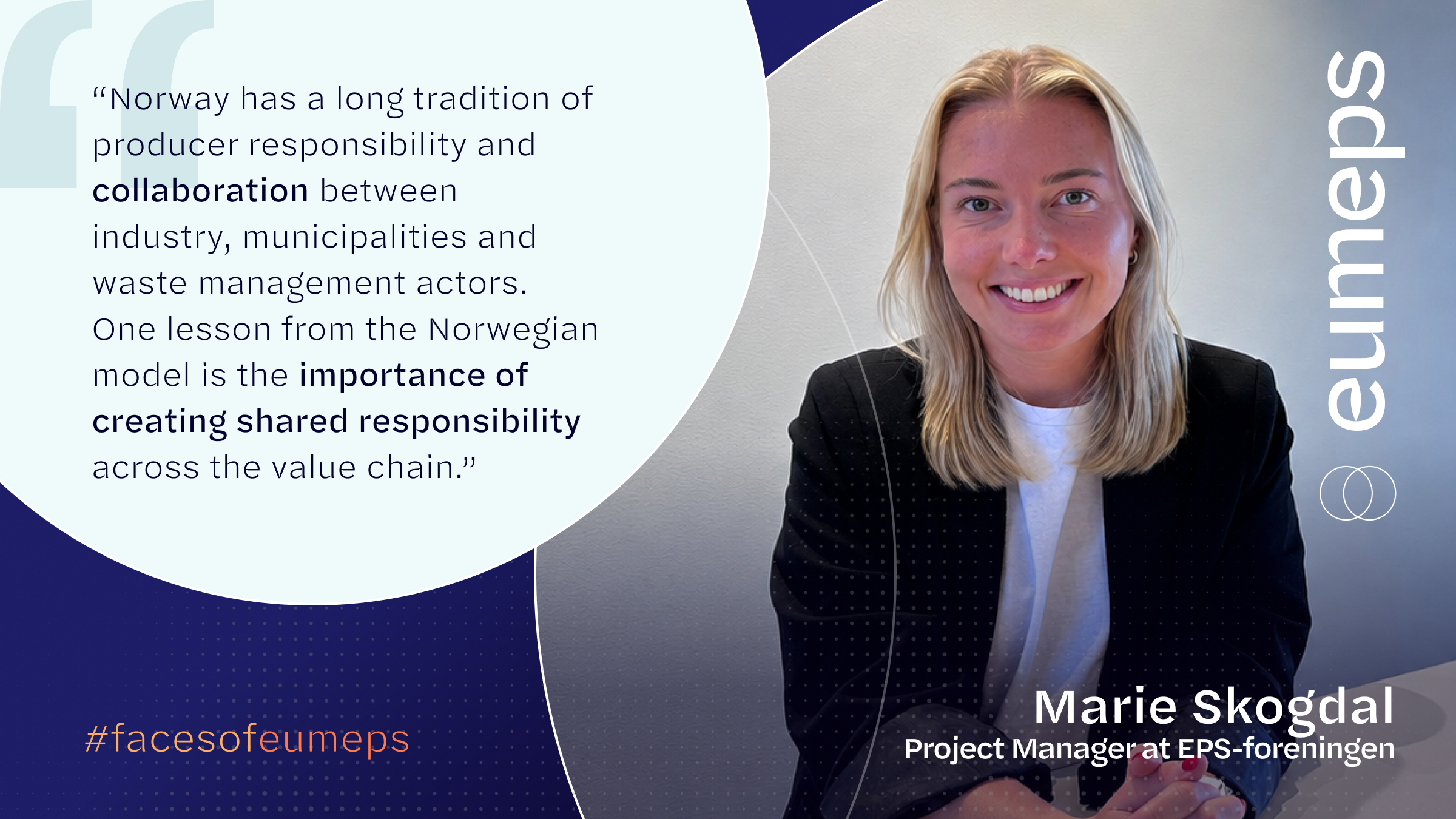
Norway has a long tradition of producer responsibility and collaboration between industry, municipalities and waste management actors. One lesson from the Norwegian model is the importance of creating shared responsibility across the value chain.
Another strength is the focus on practical solutions. Rather than viewing collection, logistics and recycling as separate challenges, they are approached as interconnected parts of the same system.
Your previous roles gave you hands-on experience in logistics and operational management. How do these skills help when building efficient collection systems for EPS and supporting a more circular economy?
Efficient recycling starts with efficient logistics. My background has taught me that even the best recycling solutions only succeed if materials can be collected, transported and processed in a practical and cost-effective way.
My experience helps me evaluate entire material flows, identify bottlenecks and look for opportunities to optimise existing infrastructure. In a circular economy, success often comes from making systems smarter and more efficient, not necessarily more complex.
Effective recycling depends on collaboration across the value chain. How important is cooperation between producers, recyclers, municipalities and collection schemes in creating long-term solutions for EPS?
Collaboration is absolutely essential. No single stakeholder can solve the challenge alone. Producers design and place products on the market; municipalities and collection schemes interact with consumers; recyclers create value from collected material; and logistics partners ensure the material reaches the right destination. The most successful initiatives are those where all actors work towards shared objectives.
Public awareness also plays a role in increasing collection rates. In your view, what are the main misconceptions about EPS recycling, and how can the industry better communicate the material's recyclability and value?
One of the biggest misconceptions is that EPS cannot be recycled. EPS is a fully recyclable material and is already being recycled into new products in many markets.
Another misconception is that because EPS is lightweight, it has little value. However, the material provides significant benefits through insulation, product protection and reduced food waste, and recycled EPS can be an important raw material in new applications.
The industry can communicate more clearly about where EPS should be collected, how it is recycled and what it becomes afterwards. Showing successful examples of circular solutions is an effective way to build confidence and increase participation.
As a newcomer to the EPS industry, what has surprised you most about the material, its applications or its contribution to resource efficiency and sustainability?
Before joining the industry, I mainly associated EPS with packaging. I quickly learned that it plays an important role in many sectors, from protecting products during transport to improving energy efficiency in buildings and supporting food safety in the seafood industry.
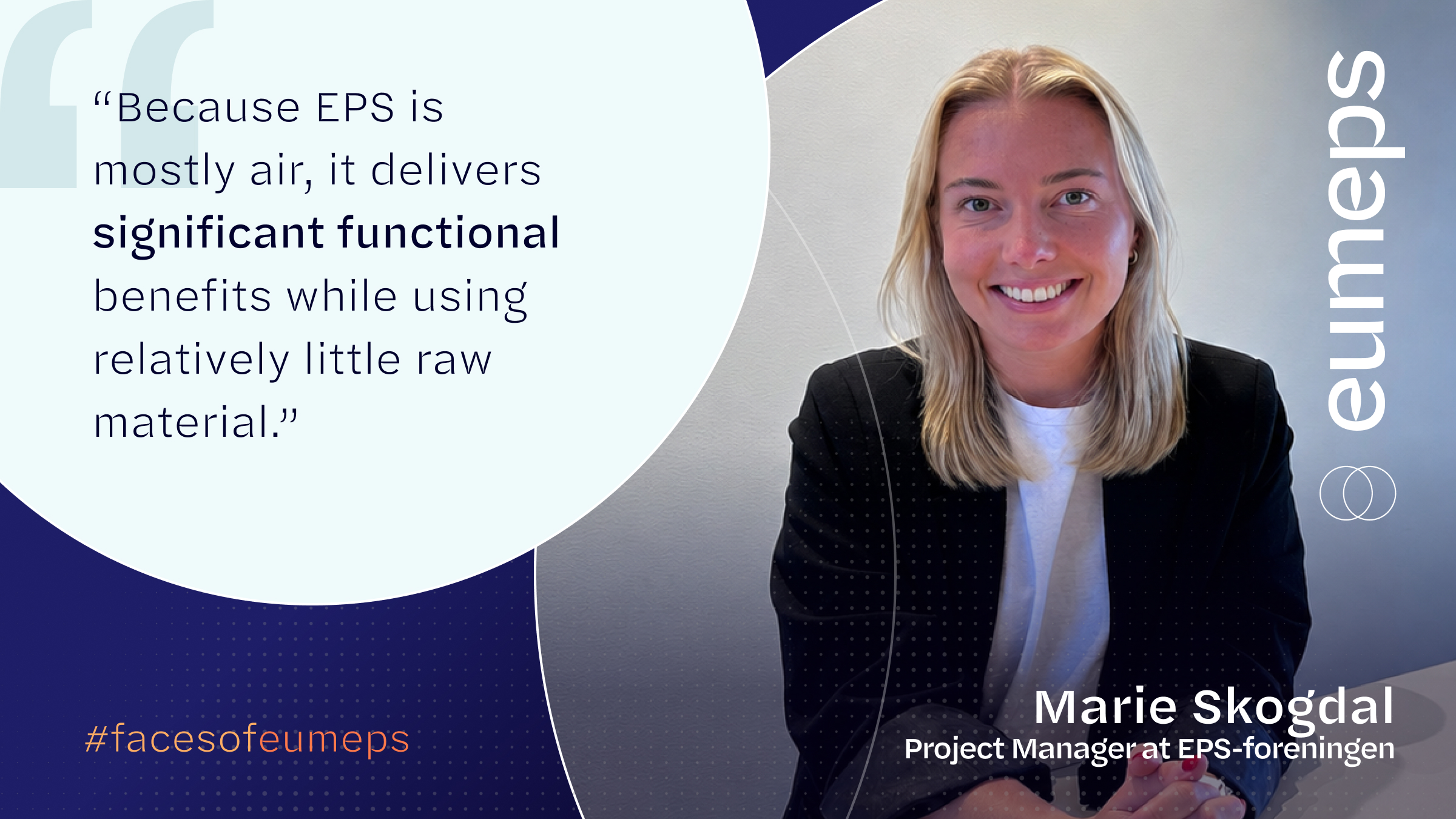
I was also surprised by how much impact a relatively small amount of material can have. Because EPS is mostly air, it delivers significant functional benefits while using relatively little raw material. Looking at sustainability through a lifecycle perspective provides a much broader understanding of its value.
Looking ahead, what are your priorities for your first year at EPS-foreningen, and how do you hope your work will contribute to the wider objectives of EUMEPS and the European EPS industry?
My main priority is to better understand where the greatest opportunities exist to increase EPS collection and recycling, and then help translate those insights into practical actions.
A particular focus during my first year will be on improving the collection of technical EPS from sectors such as electronics, white goods and construction products.
I also look forward to contributing to Nordic cooperation through NEPSA and engaging with colleagues across Europe through EUMEPS. Many of the challenges and opportunities we face are shared across countries, and there is tremendous value in exchanging experiences and best practices!
Throughout the interview, Marie Skogdal emphasises that improving EPS recycling depends on practical collection systems, efficient logistics and close cooperation between producers, recyclers, municipalities and collection schemes. By building on existing infrastructure, increasing public awareness and sharing best practices across Europe, the industry can strengthen circularity and make better use of a material with significant environmental and technical benefits. Looking ahead, Marie is committed to supporting these efforts through her work with EPS-foreningen, NEPSA and EUMEPS, helping to advance a more circular and resource-efficient future for the European EPS sector.