
The Journey of EPS Recycling and Reusability with EUMEPS
A responsible packaging industry is marked by significant milestones in the recycling and reusability of Expanded Polystyrene (EPS). EUMEPS with the Smart Packaging Europe initiative plays a pivotal role in driving innovation and advocating for practices that enhance the lifecycle of EPS packaging. Find out more about how we achieve this below.
Advancements and partnerships in EPS Recycling
 EUMEPS has advocated for the advancement of mechanical, physical and chemical recycling methods for EPS to significantly reduce its environmental footprint. Mechanical recycling, which involves breaking down used EPS into granules to manufacture new products, has seen increased efficiency and wider application under EUMEPS's guidance. While chemical recycling, which returns EPS to its original monomer form, holds the promise of perpetually recycled EPS with minimal quality loss.
Through initiatives like RecoTrace® and collaborations with recycling entities, EUMEPS has fostered improved infrastructure for EPS recycling. By providing traceability tools and supporting the development of specialised recycling facilities, EUMEPS ensures that EPS waste is effectively captured and reprocessed. These efforts have led to increased recycling rates across Europe, extending the material’s lifecycle and reducing waste.
Scientific evidence supporting the recyclability of EPS packaging
 These technical approaches to recycling are underpinned by a growing body of independent scientific evidence assessing how EPS performs under real regulatory conditions.
A recent peer-reviewed study conducted by the Polymer Engineering Department of the University of Bayreuth provides robust and policy-relevant evidence on the recyclability of expanded polystyrene (EPS) bead foams. Published in Polymer Engineering & Science, the research evaluated EPS recycling performance under conditions explicitly aligned with the EU Packaging and Packaging Waste Regulation (PPWR).
By simulating ten consecutive mechanical recycling cycles with a constant recycled content of 35% by weight, the study shows that EPS typically used in protective packaging retains its mechanical properties with only limited and predictable degradation over repeated recycling cycles. These findings bring clarity to discussions on recycled content targets and material performance, while also highlighting that achieving long-term PPWR objectives will depend not only on the intrinsic properties of EPS, but on effective sorting, advanced recycling technologies and careful control of key processing steps across the value chain.
EPS Reusability and Reduction of Environmental Impact
|
|
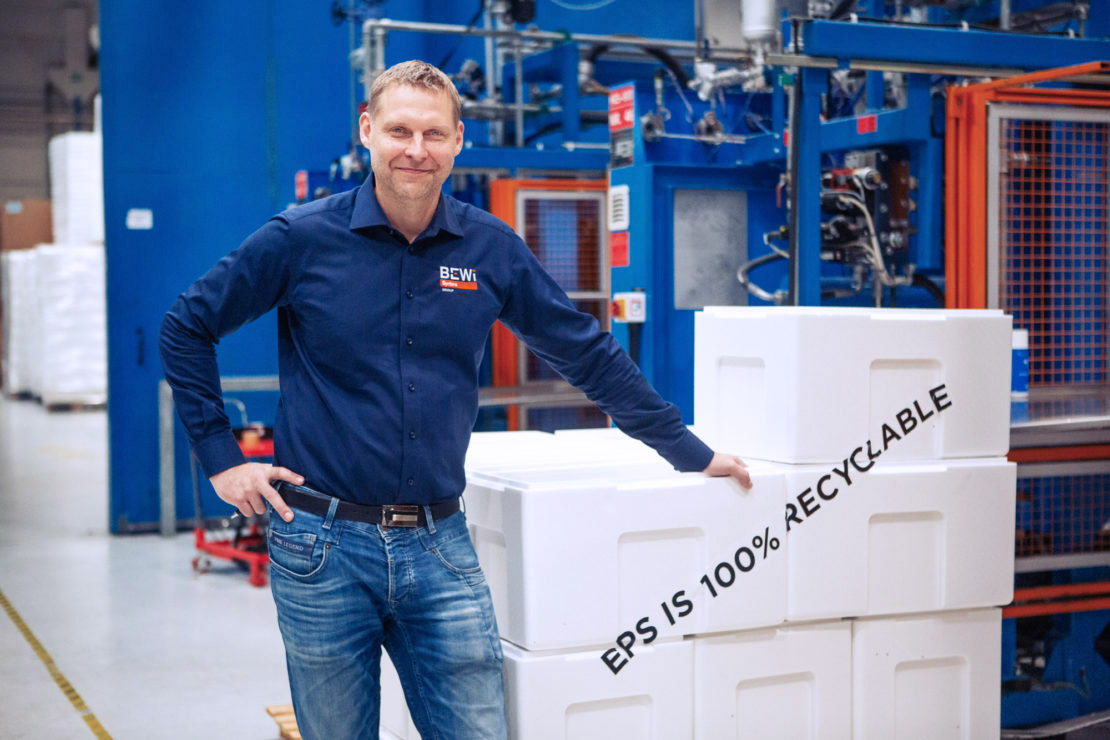
Beyond recycling, EUMEPS advocates for the reuse of EPS in various applications, emphasising its durability. By developing guidelines and best practices for the recycling of EPS packaging, especially in sectors like food transport and pharmaceuticals, EUMEPS promotes a model that values resource efficiency.
We further aim to minimise the environmental impact of EPS production and use. By promoting the adoption of cleaner production technologies, as well as encouraging the design of EPS packaging for recyclability and reusability, EUMEPS has contributed to a significant reduction in the carbon footprint associated with EPS.
A Key to Increase EPS Reuse and Recycling
Through a driven commitment to recycling and reusability, EUMEPS has positioned EPS as a smart material in recyclable packaging solutions. The organisation's initiatives and advocacy have enhanced the environmental profile of EPS and set a benchmark in the packaging industry. As EUMEPS continues to drive innovation and collaboration, the future of EPS recycling and reusability looks promising.