
ANAPE, the Spanish association representing the expanded polystyrene sector and a member of EUMEPS, recently shared an interview with José María Font, Vice-President for Construction at ANAPE, on the future of energy renovation and the role of EPS in the built environment.
In the interview, José María Font discusses the growing importance of building renovation in Europe, the need for realistic and science-based regulation, and the increasing role of EPS in improving the energy performance of buildings. He also highlights the importance of cooperation between industry associations, regulators and technical experts to support Europe’s decarbonisation and housing objectives.
The discussion provides useful insight into how the Spanish EPS sector is evolving in response to EU legislation, sustainability requirements and the wider transformation of the construction sector. It also reflects broader European discussions around affordability, energy efficiency and the renovation of the existing building stock.
The original interview was published by C de Comunicación.
José María Font: “EPS is used in 85% of energy renovation projects for the building envelope”
By Covadonga Del Nero
06/05/2026
ANAPE is the association that has brought together the entire expanded polystyrene (EPS) sector for 45 years, from raw materials to auxiliary industry, including converters. José María Font is currently the Vice-President in charge of the construction division, having previously served as President for twelve years. In this interview, he analyses the present and future of the organisation he represents, as well as that of the EPS sector.
Question: At what stage is ANAPE currently, and what would you say are its main priorities today?
Answer: ANAPE has evolved in line with the challenges facing the industry. We have an extremely versatile and efficient product, which is optimal for a wide range of building applications. At present, the association’s work is focused on two areas: firstly, complying with the growing regulatory framework, and secondly, promoting the efficiency of the energy renovation of buildings through our products.
The main priorities are to provide members with tools to comply with legislation and certification requirements under the highest environmental standards, both for factories and for products, and to provide responsiveness through applications that help meet society’s needs in terms of energy efficiency.
In order to address this broad scope of work, in addition to its own staff and advisers, ANAPE has always relied on the support of other specialised associations governed by the same ethical principles and transparency, such as Andimat, ANAIP and EUMEPS.
Question: What is currently of greatest concern to your members, and how is the association helping them to address it?
Answer: At present, the most significant challenges concerning our members are the same as those facing energy efficiency in the building sector in Spain: the necessary integration of safety and sustainability, the challenge of aligning electrification and energy efficiency with the protection of people and buildings, and, above all, the importance of realistic, up-to-date regulation based on scientific evidence.
The transposition of the Energy Performance of Buildings Directive (EPBD) into the Technical Building Code (CTE) and the National Building Renovation Plan (PNRE) are the main focal points. We actively participate in all these legislative processes, in addition to those related to the product itself and its systems, such as adaptation to the new Construction Products Regulation through the Acquis process.
Furthermore, in order to help explain the complexity of these disciplines, which operate jointly within the building and alongside its occupants, ANAPE is also part of the Alliance for Safety and Sustainability (S2E). The Alliance is a platform that brings together different industries and stakeholders involved in the construction and building sector in order to promote responsible and effective practices, encourage training and knowledge transfer, and jointly advance the sector’s adaptation and resilience in response to these new challenges.
Question: How would you describe the current situation of the expanded polystyrene sector that you represent, and what factors are shaping its development?
Answer: From a business perspective, the EPS sector has evolved in recent years towards industrial consolidation through the acquisition of family-owned companies by large groups specialising in construction materials. This change has resulted in larger and more specialised companies with an international focus, which has further professionalised the sector.
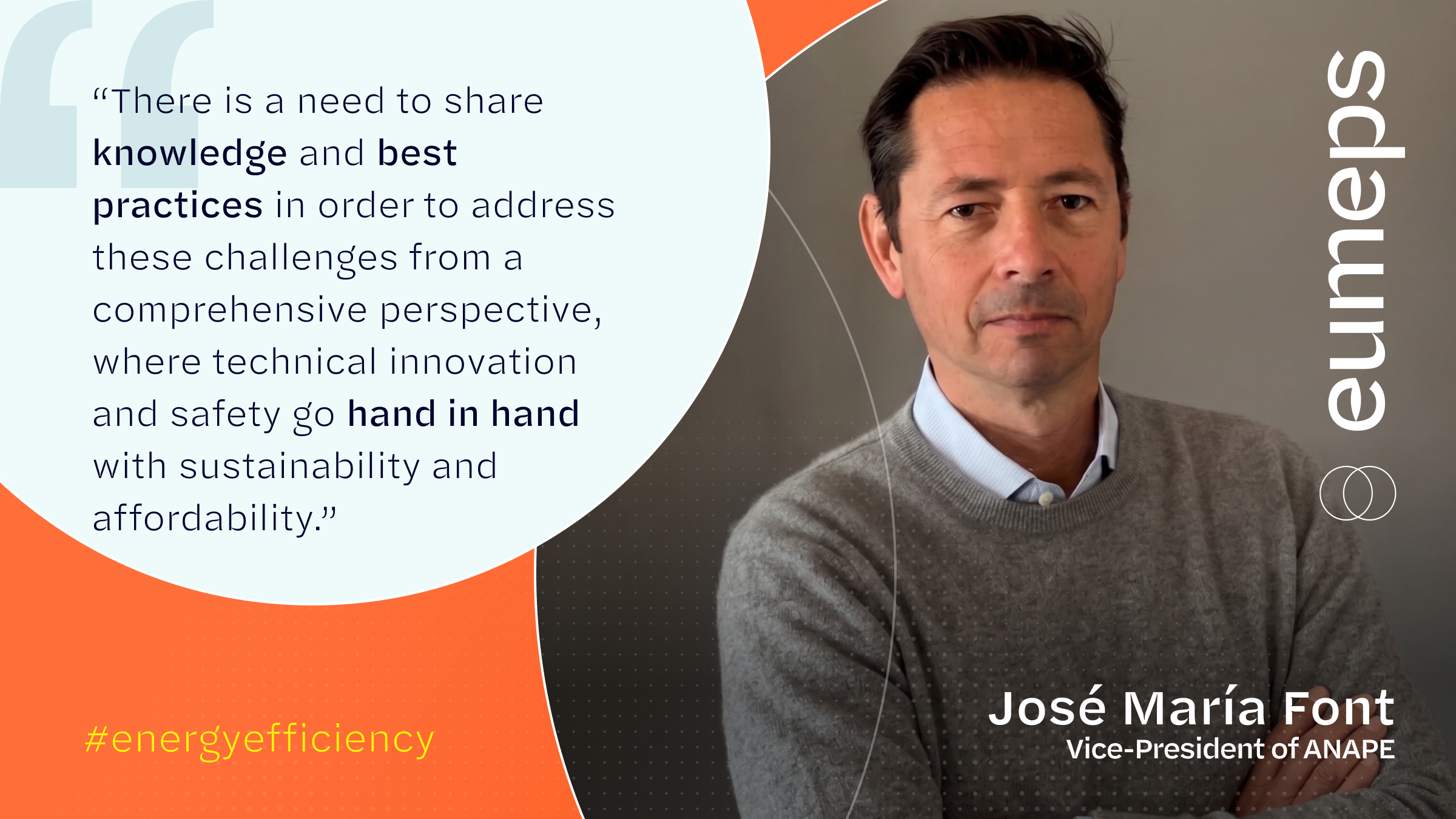
From the product perspective, improvements in raw materials and processes have strengthened the quality of a product that is used in 85% of energy renovation projects for the building envelope. EPS within an ETICS system (External Thermal Insulation Composite System), due to its lightness, dimensional stability, impermeability, durability and ease of installation, is the preferred choice for limiting the building’s energy demand. In this respect, Spain has followed what had already been practised in Europe for a long time.
Question: Looking ahead to the next three to five years, what do you believe will be the major challenges — and opportunities — for your members?
Answer: The renovation of the existing building stock will continue to be the greatest challenge in the immediate future, not only for the sector but also for the country, in order to meet the decarbonisation targets imposed by the EU.
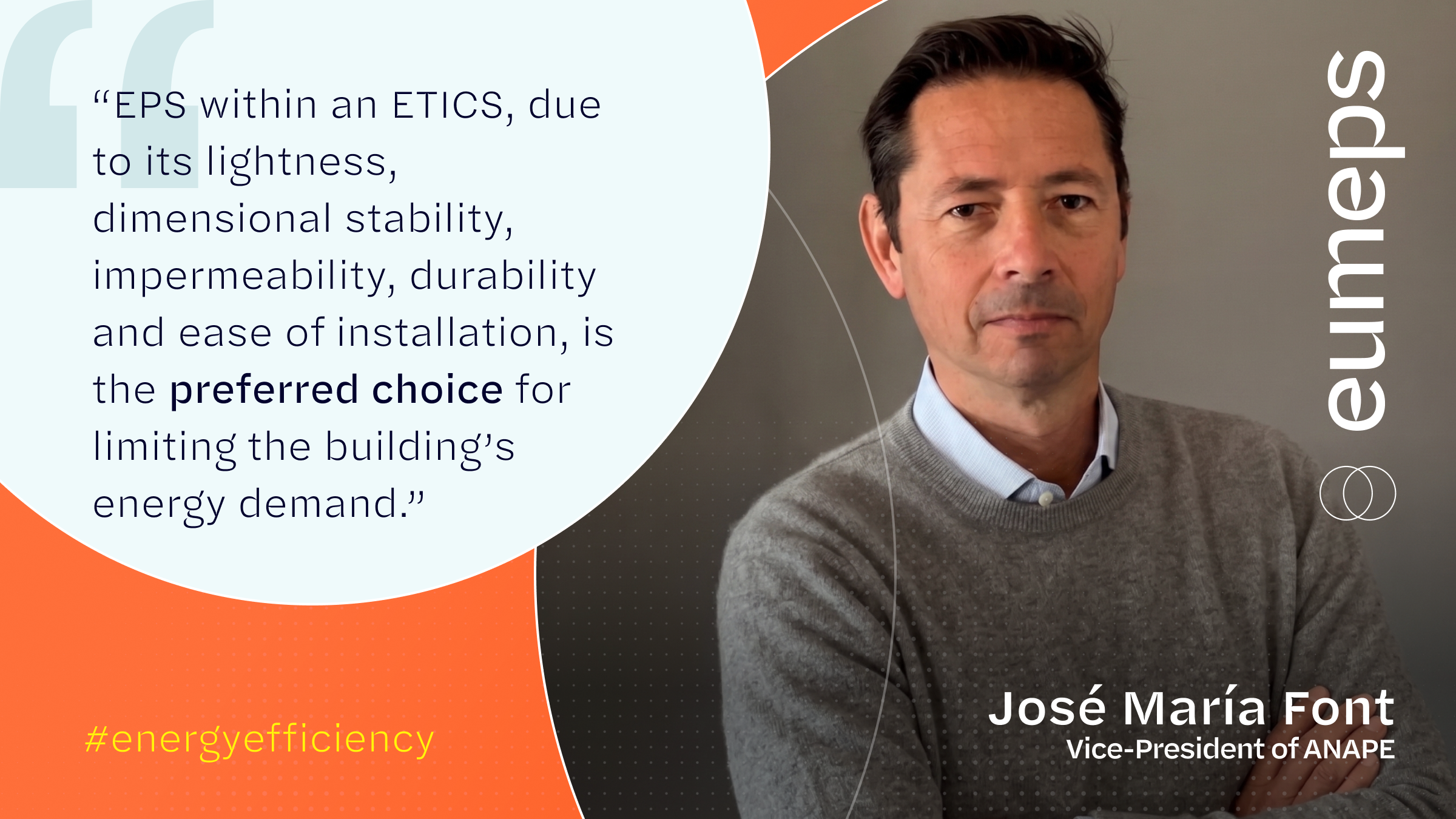
Public-private cooperation is essential to achieve this objective. In addition, there is a need to share knowledge and best practices in order to address these challenges from a comprehensive perspective, where technical innovation and safety go hand in hand with sustainability and affordability. There is still much to be done regarding energy poverty, and the appropriate mechanisms must be properly established in order to finance and carry out renovation in a global and effective manner.
Question: In a context such as the current one, what added value does a sector association provide today, compared with everyone “going their own way”?
Answer: Historically, ANAPE has always been a great support for companies: through technical training, information, dissemination, representation on standards and certification committees… but now it is much more than that. In the current context, where there are companies and organisations with substantial resources dedicated to lobbying in order to impose their own solutions, it is essential to make one’s voice heard.
Furthermore, ANAPE is the link with Europe at a time of regulatory harmonisation and of an absolute technical and reputational relaunch project in the environmental field, thanks to the major advances in EPS recycling (in which we are a country with very strong rates) and significant industrial innovation developments that go beyond the borders of each Member State and involve raw material suppliers.
The evidence of the association’s quiet and sustained success over all these years is the high level of representativeness it has among EPS manufacturers in Spain.
Question: If you had to explain to a manufacturer, in a single sentence, why it is more important than ever today to be part of an association… what would you say?
Answer: In an increasingly competitive and changing environment, collaboration is not an option but a strategic advantage: together we are stronger.
In a period marked by the energy transition, housing affordability challenges and increasing regulatory complexity, the renovation of Europe’s building stock remains a strategic priority. As highlighted throughout this interview, expanded polystyrene continues to play an important role in supporting energy efficiency, technical performance and practical renovation solutions across Europe.
The discussion with José María Font also underlines the importance of cooperation between industry, associations and public authorities to ensure that sustainability, safety and affordability are addressed together. For EUMEPS and its national members such as ANAPE, these discussions are essential to supporting evidence-based policymaking and sharing practical expertise from across the EPS value chain.
At European level, the challenges linked to decarbonisation, energy poverty and building renovation will require long-term collaboration, technical innovation and realistic implementation pathways. The exchange of knowledge and best practices between national associations and European stakeholders will therefore remain an important part of the sector’s contribution to the wider objectives of the European Union.