Back
Back

Advocacy & Political Engagement

In 2025, EUMEPS maintained a strong and active presence in the European policy arena. From the Clean Industrial Deal to packaging regulation and international treaty negotiations, the association contributed evidence-based input and supported constructive dialogue at all levels. The Secretariat worked to defend EPS in legislative processes, shape new technical standards, and engage directly with EU decision-makers. These efforts are grounded in science, collaboration, and a long-term vision for circular, competitive industry. Highlights include a new lifecycle assessment on EPS fish boxes, updated guidance on REACH, and growing visibility in the Global Plastic Treaty negotiations.
Strengthening Expertise and Regional Engagement
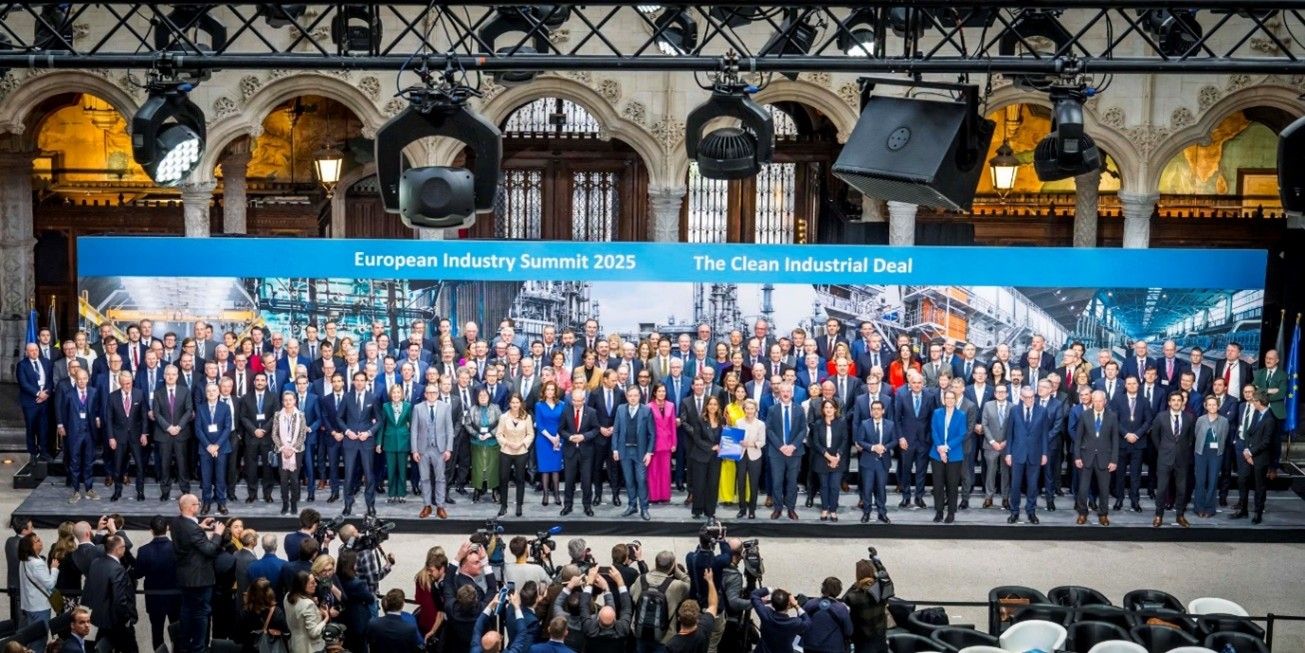
A major focus this year was the Clean Industrial Deal, initiated through the Antwerp Declaration. EUMEPS contributed actively to the process, including by submitting a dedicated position paper to the Secretariat-General of the European Commission, with Jakub Stefaniak supporting technical input and Jürgen Lang representing the association at the Clean Industrial Deal Summit in Antwerp. The event brought together industry leaders and European Commission President Ursula von der Leyen, highlighting the need for long-term industrial policy aligned with sustainability goals.
“Investment must match ambition. The Clean Industrial Deal outlines significant funding opportunities, but businesses need clarity on how to access these resources. Without streamlined financial support, industrial transformation will remain slow.” 
— Jürgen Lang, Director General of EUMEPS
Defending EPS in the Packaging and Packaging Waste Regulation
EUMEPS continues to play an important role in defending expanded polystyrene (EPS) within the framework of secondary legislation under the Packaging and Packaging Waste Regulation (PPWR). Lea Salihovic has led the association’s advocacy efforts on Article 29, with a strategic focus on highlighting the environmental and functional performance of EPS fish boxes and ensuring that their role in cold chain logistics is properly considered in the implementation of reuse targets.
While the legislative process is still underway, coordinated action and the introduction of new scientific evidence have significantly advanced the case. EPS fish boxes are now closer than ever to being granted an exemption from reuse obligations.
A key milestone in this effort was the publication of the Lifecycle Assessment of Fish Boxes in Cold Chain Logistics (RDC, 2025). Developed in close collaboration with key partner associations from the fisheries and aquaculture sectors, the study confirms that EPS offers the lowest environmental and economic impact for long-distance seafood transport, while ensuring high food safety performance. Participating organisations included:
  • AIPCE-CEP – Association of Fish Processors and Traders in the EU.
  • Europêche – Association of National Fishing Enterprise Organisations in the EU
  • FEAP – Federation of European Aquaculture Producers
  • UMF – Union du Mareyage Français (French Fish Wholesalers' Union)
  • Norwegian Seafood Federation – Sjømat Norge (Seafood Norway)
Contributing to European Standardisation for packaging
As part of a contribution to standardisation activities, Lea Salihovic has been actively engaged in the development of Design for Recycling guidelines for EPS packaging within the framework of CEN/TC 261. Her work has focused on ensuring that EPS is adequately represented in the overarching standards mandated by the PPWR secondary legislation, covering collection, sorting, mechanical recycling, and the usability of recycled EPS in new applications.
By contributing to the drafting of harmonised standards (CEN) under the Standardisation Request Ad Hoc Group on PPWR, she has worked to secure a fair and science-based methodology for EPS, including the possibility of recognising recycling of separately collected EPS streams. This effort is crucial to prevent the exclusion of EPS packaging from recycling into new EPS packaging, thereby safeguarding the industry’s ability to demonstrate compliance with future EU recyclability requirements.
Providing Guidance on REACH Microplastics
In response to the adoption of the REACH microplastics restriction, EUMEPS published new technical guidance to help members meet upcoming compliance requirements. The document includes methodologies for estimating pellet loss and clarifies reporting and labelling obligations, supporting members in managing operational and regulatory risks.
Engaging in the Global Plastic Treaty Negotiations
At the international level, EUMEPS remained active in the Global Plastic Treaty negotiations, as part of the Global EPS Sustainability Alliance (GESA). The delegation was composed of Lea Salihovic (EU Policy Manager, EUMEPS), Alma Lamberti (Styrenics Policy Manager, Plastics Europe), and Chresten Heide-Anderson (Director, NEPSA – Nordic EPS Alliance and Vice-President of EUMEPS). During the fifth round of talks (INC-5.2) in Geneva, over 3,700 participants from 184 countries gathered to debate the treaty’s scope and implementation.
“At the international level, EUMEPS remained active in the Global Plastic Treaty negotiations, as part of the Global EPS Sustainability Alliance (GESA). The delegation was composed of Lea Salihovic (EU Policy Manager, EUMEPS), Alma Lamberti (Styrenics Policy Manager, Plastics Europe), and Chresten Heide-Anderson (Director, NEPSA – Nordic EPS Alliance and Vice-President of EUMEPS). During the fifth round of talks (INC-5.2) in Geneva, over 3,700 participants from 184 countries gathered to debate the treaty’s scope and implementation.”
Lea Salihovic
EU Policy Manager
Contributing to European Standardisation
Standardisation remained a strategic priority. EUMEPS contributed to technical discussions under CEN, particularly on fire testing for façades and photovoltaic (PV) panels installed on flat roofs. Both Jakub Stefaniak and Emanuela Gallo supported expert working groups and followed developments that will shape future requirements for EPS-based solutions in construction.
Supporting Energy Efficiency Policy
EUMEPS joined a Joint Industry Statement presented to the European Commission as part of the High-Level Dialogue on Energy Efficiency. The statement called for more predictable policy frameworks, easier access to EU funding, and stronger support for energy-efficient technologies—reinforcing insulation as a key solution for climate-neutral construction.
Direct Engagement with EU Policymakers
EUMEPS maintained direct contact with EU institutions throughout the year. This included a meeting with the team of MEP Elisabeth Grossmann to discuss the circularity of EPS and the need to prioritise insulation in building renovation policies. In parallel, Jakub Stefaniak met with MEP Kamila Gasiuk-Pihowicz to exchange views on imports and to present the association’s work on industrial competitiveness and circular materials.
MEP Gasiuk-Pihowicz also expressed support for the publication Women in the EPS Industry, recognising the importance of highlighting women’s contributions across the sector. These dialogues remain essential to ensuring that the EPS industry is accurately understood and fairly represented in European policy debates.

“Across the EU, only around 22 % of tech roles are filled by women, and despite women making up nearly half the workforce, they hold just about 1/3 of board seats in large companies - with even lower representation in countries without binding gender quotas. These gaps reflect untapped potential in shaping decisions and driving progress at a time when Europe cannot afford to overlook any talent.”
MEP Kamila Gasiul-Pihowicz
European Parliament, Vice-chair of the Committee on the Internal Market and Consumer Protection
Next
Technical Affairs & Scientific Contributions
next
next